


How to Block Hand-Dyed Knitting and Crochet Projects

As dye artists, we know blocking with hand-dyed yarn can sound confusing. Fear not — we're here to make this approachable and fun. Blocking is basically the process of training a finished knit or crochet project to stay a certain shape by evening stitches, opening lace, and setting finished dimensions after soaking or steaming. Blocking with hand-dyed yarn is unique because dyes (especially deeply saturated colorways) can release from the yarn. Don't worry though: dye release on the first block is normal.
What Is Blocking — and Do You Actually Have to Do It?
One question we get a lot is, "What is blocking?" Often accompanied with: "Do I actually have to do it?" Let's answer the easy one first: Blocking means soaking or steaming a finished project to set stitch definition, even out tension, and "bloom" the fiber into its final shape.
Now, do you actually need to block your finished project (which may or may not be sitting in a bag waiting for its blocking debut)? Well, that depends on what you made. The super quick answer is: Yes for lace, worth-it for garments, and optional for small accessories.
When it comes to lace, blocking is non-negotiable because lace only really looks like lace after blocking opens the stitches and gives it that airy aura it's loved for. Projects knit in Suri Lace (our Suri Lace collection) bloom dramatically after blocking — the fabric looks and feels completely different. This is where the investment pays off most visibly.
If it's a non-lace garment, we still think blocking is worth doing — sweater pieces that are not blocked before seaming don't meet up evenly. And when it comes to small accessories (hats, cowls in merino), blocking is optional, but it makes a noticeable difference: stitch definition sharpens and fabric smooths.
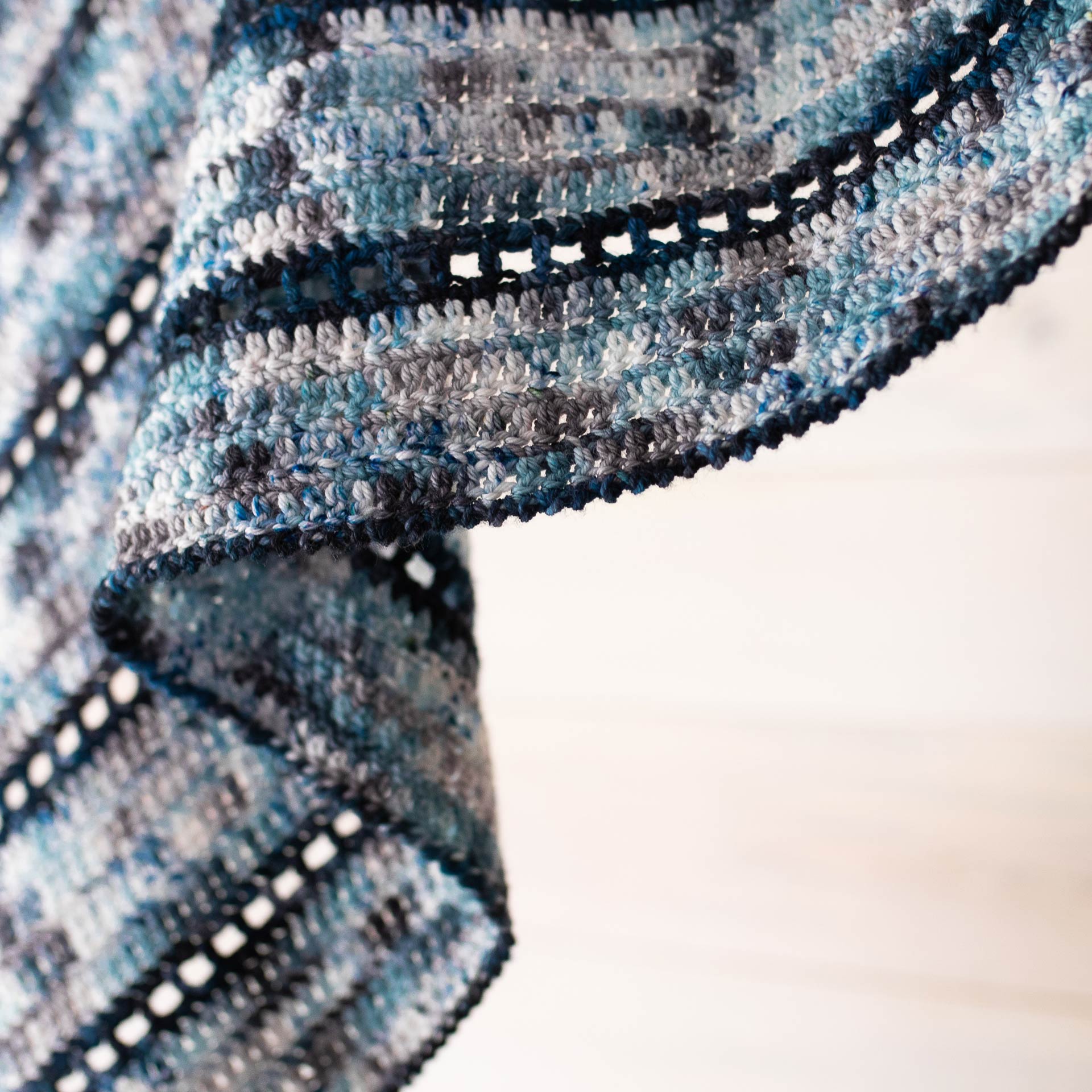
A note about crochet: Blocking is equally valid for crochet. Our complex and stunning crochet pattern Niamh Sweater-Scarf drastically transforms with a proper wet block.
When you're blocking for the first time, start with a swatch before you move on to something bigger, like a sweater. This will get you used to the technique and let you see how hand-dyed yarn behaves. As avid dyers who work with natural fibers, we know blocking can preserve both color integrity and softness, so it's worth learning about and practicing. Trust us, there's no experience like firsthand experience! At the end of the day though, blocking is a tool, not the ultimate test to see if you're a "real" knitter.
Wet Blocking vs. Steam Blocking — Which Is Right for Your Fiber?
The short answer: Suri Lace gets steam-blocked gently by hand, and rarely pinned under tension. Our superwash merino bases get wet-blocked as the default. We'll break down the details below.
Wet blocking

This method works really well for our superwash merino bases — Fingering, Sparkle Fingering, Sport, DK, Sparkle DK, Worsted, Bulky — all of which can be pinned to measurements.
- Soak your project in cool to lukewarm water with a no-rinse wool wash (we like Eucalan, Soak, and Kookaburra). Don't move it around in the water — just let it soak for 15–30 minutes and then lift it out gently.
- Press your project between a dry, clean towel and gently roll it so the towel absorbs as much water as possible; don't wring it. Repeat with a second dry towel if needed.
- Lay it on blocking mats, and shape your project to the pattern's finished measurements. Allow it to dry fully before unpinning (merino typically dries in 12–24 hours).
Steam blocking
This method works especially well for color work and projects that need extra gentle care.
- Lay your project on a flat surface covered with a towel or clean ironing board. Hover a steam iron or garment steamer a few inches above the fabric until all the stitches are saturated with steam. Never press the iron down on the project directly.
- As you steam, stretch your project into the final shape and size you want. You can keep steaming and stretching till you're happy with the result.
- Pin it to the towel underneath to keep it from shrinking. Let it dry 100% before you move it.
Steam blocking for Suri Lace
We've found that this approach works best for our beautiful alpaca base, a 74/26 Suri Alpaca/Silk blend.
- First, find a low-traffic area of your home where you can gently lay out your project.
- Prepare to steam block your piece — this will preserve halo and drape. Pat into shape, then steam gently from above.
- Heads up: Do not, for the love of all things wooly, pin under tension. The silk content and delicate halo can distort permanently if stretched while wet. (Alpaca and silk have very little elastic memory, so once they're stretched wet they tend to stay stretched — the halo and drape won't bounce back the way springy wool does.)
- Store your piece in a breathable container, away from light, tucked away with some cedar or lavender, natural moth repellents.
Learn more about this dreamy base in our Suri Alpaca Guide, and peek our Suri Lace collection.
Spray blocking
This method is also a great option for Suri Lace, small items, and for touch-ups after wear: mist the project with clean water from a spray bottle, shape by hand, and let dry. Perfect for hats and cowls between full blocks!
Does Hand-Dyed Yarn Bleed When You Block It? (And How to Test)
Quick answer
Yes, hand-dyed yarn can bleed dye in the first wet block. This is normal and expected; not a flaw of hand-dyed yarn. The cause is simply dye chemistry — some colors (reds, deep purples, jewel-toned blues) are more likely to release excess dye the first time you get them wet. We recommend doing a colorfastness test first so you know what you're dealing with before committing to a full block:
- Take a short length of yarn (a leftover tail or a bit of the same colorway — not from your actual project).
- Soak it in cool water for 5 minutes.
- Press it firmly against a white paper towel.
- If there's significant color on the towel, proceed with caution (press inside a towel to dry, and no pinning under tension). If the towel shows a faint blush, that's normal exhaust, so proceed confidently. If there's no color left behind, that's great news! Block freely.
A note from our dye studio: We've watched colorways exhaust dye in a blocking basin hundreds of times, but we still remember the days when blocking seemed a little scary. There's no need to panic if you see tinted water — what you see in the first wet block is just normal excess dye, not yarn failure.
Why Bad Sheep Yarn recommends no-rinse wool wash
We love using Eucalan, Soak, and Kookaburra because they are pH-neutral and gentle — they clean gently without stripping or agitating dye out, something you can't accomplish with plain water. Whichever wash you choose though, just remember cool water is non-negotiable for hand-dyed yarn. Hot water loosens excess dye and, with agitation, encourages it to release. (For the full care routine, see our guide on how to wash hand-dyed yarn.)
A note about variegated colorways
A soak with cool water with no wringing and no agitation is your best bet — it lets the colors settle rather than push them around. Variegated yarn (high-saturation colorways with multiple dye colors on a single skein) is most prone to dye migration under heat with agitation. Learn more in our Variegated Hand-Dyed Yarn Guide.
At the end of the day, dyeing is an art with variables — a breath, a water temperature shift, a slight tilt to a pan can change the whole outcome. Hand-dyeing in small batches means every skein carries those birthmarks. Knowing this and celebrating it helps you trust the process, and have a lot of fun on the crafting adventure.
Step-by-Step: How to Block a Hand-Dyed Knitted or Crocheted Project
Step 1 — Gather supplies
Basin or sink, cool water, no-rinse wool wash (Eucalan, Soak, or Kookaburra), two clean towels, blocking mats (optional) and rust-free pins, a tape measure, and your pattern's finished measurements. If you're working with Suri Lace, swap the pins for a steamer or steam iron.
Step 2 — Colorfastness test
If this is your first time blocking this colorway, run the quick colorfastness test first — see the previous section for the step-by-step process.
Step 3 — Soak

Use cool water, a small amount of no-rinse wool wash, and submerge gently for 15–30 minutes. For delicate lace, 15 minutes is enough — don't let the project become so waterlogged it loses all structure. (Suri Lace is the exception: skip the soak entirely and steam-block it instead, following the Suri Lace method above.)
Step 4 — Remove water
Lift the project out carefully. Gently press (never wring) between clean towels. Roll into the towel to absorb excess water. Repeat with a second dry towel if the first one is saturated. The project should feel damp, not dripping.
Step 5 — Shape
Lay on blocking mats and bust out that tape measure: Shape to the finished measurements from your pattern. For lace projects, pin out each motif or point to open the pattern (rust-free pins for the win!). For Suri Lace: lay and shape by hand only, and steam gently from above — do not pin under tension. (Our Suri Lace collection benefits the most from this steam-blocking method.) For garments: shape to your actual gauge-measured dimensions.
Step 6 — Dry

Allow to air dry fully before removing pins or wearing. Trust me, do not be tempted to use your hair dryer! Merino bases typically dry in 12–24 hours depending on climate. Suri Lace may take longer because of the silk content.
Step 7 — After blocking
Blocking is not permanent. After wear and re-washing, you will want to re-block. A light re-block after each wash is what keeps the project looking its best for years and years.
FAQ — Quick Answers to Common Blocking Questions
Do I have to block my finished knitting or crochet?
It totally depends. For lace, yes — blocking turns that crumpled heap of stitches into the creation you intended. For sweaters, blocking before seaming makes assembly cleaner, and the sweater fits better. For small accessories (hats, cowls, etc.) in superwash merino, it's optional, but even a quick wet block improves stitch definition noticeably.
Will my hand-dyed yarn colors run while I'm blocking?
They can release a small amount of dye (especially on the first wet block) and that's completely normal. Deep colors like burgundy, dark blue, and rich purple are the most likely to release a faint blush. Run the colorfastness test first to have all the information you need before committing to a full block.
Can I block a crochet project the same way as a knitted one?
Yes — the methods are the same. Wet blocking works for both knitting and crochet. Steam blocking is a gentler option for textured crochet stitches since it preserves raised texture better. The right sections open, the garment sits flat, and the drape really comes alive.
How do I block Suri Alpaca yarn without damaging it?
Lay it down and shape by hand while it's damp and steam gently from above with a steamer or steam iron held a few inches away from the fabric. Never pin under tension — the silk content and halo can distort permanently if stretched while wet. And never ever put Suri Lace in the washing machine or expose it to hot water.


Leave a comment