
How to Knit a Sweater: A Beginner's Step-by-Step Guide

If you're ready to knit a sweater, and have experience knitting smaller items, rest assured: You won't be starting from scratch. The stitches are the same ones you already know and love. What will be new is the scale, shaping, and estimating yarn. A sweater generally takes 5–12 skeins depending on weight and size (a little less for fingering, a little more for a large worsted pullover). This guide will walk you through the process start to finish, so you feel ready to get started.
What Makes a Sweater Different from Smaller Knits?
If you've only knit smaller projects up till now, knitting a sweater is not as hard as you may think. The stitches are exactly the same, and here's the fun new part: knowing scale, shaping, and construction logic — things you can learn as easily as you learned how to stitch. Before you cast on, you'll choose a construction method and a yarn weight. Then do a favor for your future self: make a quick swatch, so you won't need to worry about your sweater coming out too big or too small. When you're ready, here's our trusty needle size guide by weight.
“The question I get most often isn't: ‘How do I knit the sweater?’ — it's: ‘How much yarn do I actually need?’ My answer is always: one more skein than you think.”
Top Down vs. Bottom Up — Which Construction Should You Choose?

A quick note from our studio: Most top-down sweaters are in the round, and most flat-knit sweaters require seaming.
Top-Down Construction
Many knitters find top-down raglan forgiving, especially for their first sweater. Most top-down sweaters are worked in the round on circular needles. You'll cast on at the neck, and work the yoke, separate sleeves, and the body down to the hem. This method requires no seaming and you can try the sweater on as you go. If you need to adjust length, this method makes it easy.
Pro-tip: Holding a single skein of Suri Lace alongside a DK or Worsted adds a beautiful halo effect on the yoke section. Hand-dyed skeins from our Suri Lace collection give sweater projects a beautiful, pill-resistant halo.
Bottom-Up Construction
Some knitters find it easier to manage the math with this method: Cast on at the hem, work upward to the shoulders, and join pieces. Crafters like this style for its traditional construction and access to pattern variety. Bottom-up construction usually requires seaming, a learnable skill you can experiment with; just arm yourself with a tapestry needle and patience.
Flat Construction (Knitting in Pieces)
Despite the name, "flat" refers to knitting back and forth, not the physical shape of the fabric. Knitters who enjoy this approach appreciate segmentation: each panel (front, back, and sleeves) is knit flat, then seamed together. This classic method boasts a very wide pattern selection. Pro-tip: DK and Worsted are very seam-friendly if you go this route.
If you want something low-pressure that takes the construction decision off the table, spring for a kit that includes a pattern and yarn bundled together. Check out our inspiring Bad Sheep Yarn kits collection when you're ready.
How Many Skeins Do You Need for a Sweater?
The most intimidating part of planning your first sweater isn't the stitches — it's the yarn math. If you're worried about how many skeins you need to make a sweater, the simple answer is 5–12 skeins at $30/skein.
| Weight | Small/Medium (~36–38" chest) | Large/XL (~42–44" chest) | Plus (~48"+ chest) |
|---|---|---|---|
| Fingering weight colorways | 4–6 skeins | 6–8 skeins | 8–10 skeins |
| DK weight colorways | 5–7 skeins | 7–9 skeins | 9–11 skeins |
| Worsted weight colorways | 7–9 skeins | 9–11 skeins | 11–13 skeins |
These counts are estimates for a classic pullover. Your pattern's yardage requirement is the authoritative number — so always check it against your chosen base's yardage per skein before you order. And with hand-dyed yarn specifically, always buy one extra skein, and buy them all at once from the same colorway listing. We don’t hold dye lots — when your skeins are dyed together, our team matches them for you.
If you feel like skipping the math altogether, we love doing that too: that's why we made several nifty Bad Sheep Yarn knitting kits for crafters who want their pattern and yarn bundled with yardage calculated. Our Elm Lace Pullover kit is a great example of specified yardage, so you can see what a real sweater kit looks like.
Choosing Yarn Weight for Your First Sweater

These three superwash weights each have their own merits; choose based on how much time you're willing to invest in your project. DK and Worsted are the most beginner-friendly yarn weights for a sweater.
We love recommending DK for beginner sweater-makers because it's quite forgiving, shows gauge clearly on mid-sized needles, and knits up efficiently.
We enjoy Worsted because it's even faster and reaches gauge more quickly — it's the most encouraging weight if you like to see progress asap.
If you want something more delicate looking, we adore Fingering weight for its significantly slower pace and breathtaking outcome.
Oh, and one more thing that makes these options sweater-friendly: each is machine washable on a gentle cycle — perfect for a piece you want to wear and wash often.
If you're craving a unique accent and feeling a little extra adventurous, Suri Lace is an advanced accent option held alongside a DK or Worsted for a halo effect on yoke sections for a sweater-in-the-round. Suri's pill-resistance helps it shine on a sweater! If you choose to add it, just plan on handwashing or steam blocking the sweater to preserve the halo; Suri can never go through the washer or dryer.
If you want a deeper look at which specific colorways and bases work best for different sweater styles, we're putting that together — check back here for the full yarn comparison guide.
Finishing Your Sweater

You've finally made your first sweater. Congratulations! You've graduated to two of the most satisfying steps: blocking and end-weaving. Since your lovely sweater is made with a superwash Merino base, soak it in cool water with a wool wash, and press gently (don't wring). Shape the sweater to your measurements and lay it flat to dry. This wet-blocking process is what actually makes your new sweater look like a sweater — it's a total gamechanger. If you're blocking a suri-accented sweater, a gentler alternative to wet blocking is steam blocking, which prevents overstretching and helps the alpaca halo go from flat to extra fluffy.
A quick note from our studio about weaving in ends: A darning needle (tapestry needle) gives a cleaner result than a crochet hook for woven-in ends.
Now you get to sit back and bask in the glory of your first sweater. This is a major milestone. If you can't keep it to yourself, then good! We encourage you to celebrate with us: Our Bad Sheep Yarn Project Gallery is a place we created where crafters can share their finished projects with the BSY community. We are ready to pepper your photo with hearts, likes, and words of encouragement. Hope to see you there.
Frequently Asked Questions
How many skeins of yarn do I need to knit a sweater?
| Weight | Small/Medium (~36–38" chest) | Large/XL (~42–44" chest) | Plus (~48"+ chest) |
|---|---|---|---|
| Fingering weight colorways | 4–6 skeins | 6–8 skeins | 8–10 skeins |
| DK weight colorways | 5–7 skeins | 7–9 skeins | 9–11 skeins |
| Worsted weight colorways | 7–9 skeins | 9–11 skeins | 11–13 skeins |
Most adult sweaters need 5–12 skeins depending on yarn weight and finished chest size. Fingering weight needs the fewest skeins (our fingering skeins carry the most yardage), and Worsted the most. Always buy one extra skein, and order them all at once — we don’t hold dye lots, so our team matches your skeins when they’re dyed together.
What yarn weight is best for a first sweater?
DK or Worsted. DK knits up at a satisfying pace and gives you enough stitch definition to see your progress clearly. Worsted is even faster. Fingering is beautiful but takes significantly longer and leaves less margin for gauge variation.
Is top-down or bottom-up easier for a first sweater?
There's no wrong answer. Top-down raglan is generally the most forgiving construction for beginners making a sweater: it removes the most unknowns because no seaming is required, and you can try it on as you go to check the fit. Bottom-up, on the other hand, offers more pattern variety.
Can I use hand-dyed yarn for a sweater?
Yes, just keep in mind we recommend buying all your skeins from the same colorway listing at the same time. Because hand-dyed yarn is made in small batches, buying them together means our team can match your skeins. Pro-tip: One extra skein is always worth it.
What needles do I need to knit a sweater?
Use circular needles in the size your pattern recommends and in a length that works for the construction method. For example, 40" circular for working in the round on the body is a popular choice. Typically US 3–5 works for DK, and US 7–9 for Worsted. Always let your gauge swatch confirm the needle size — the pattern spec is a starting point, not a guarantee.
Knitting a sweater is one of the best things you can make for yourself — and the yarn is where it all begins. Find the colorway that calls to you.


Marcie, Thank you so much for your essay on sweaters. It is just what I needed to forge ahead and start knitting sweaters again.
I have knitted numerous sweaters and vests in the past but most have not been perfect fits. Of course, back then I did not know how important it is to swatch. I have my BSY yarn. Now, I need to decide on a pattern!
Thanks again!
Really love the information in this article. Thank you My Shepherdess.
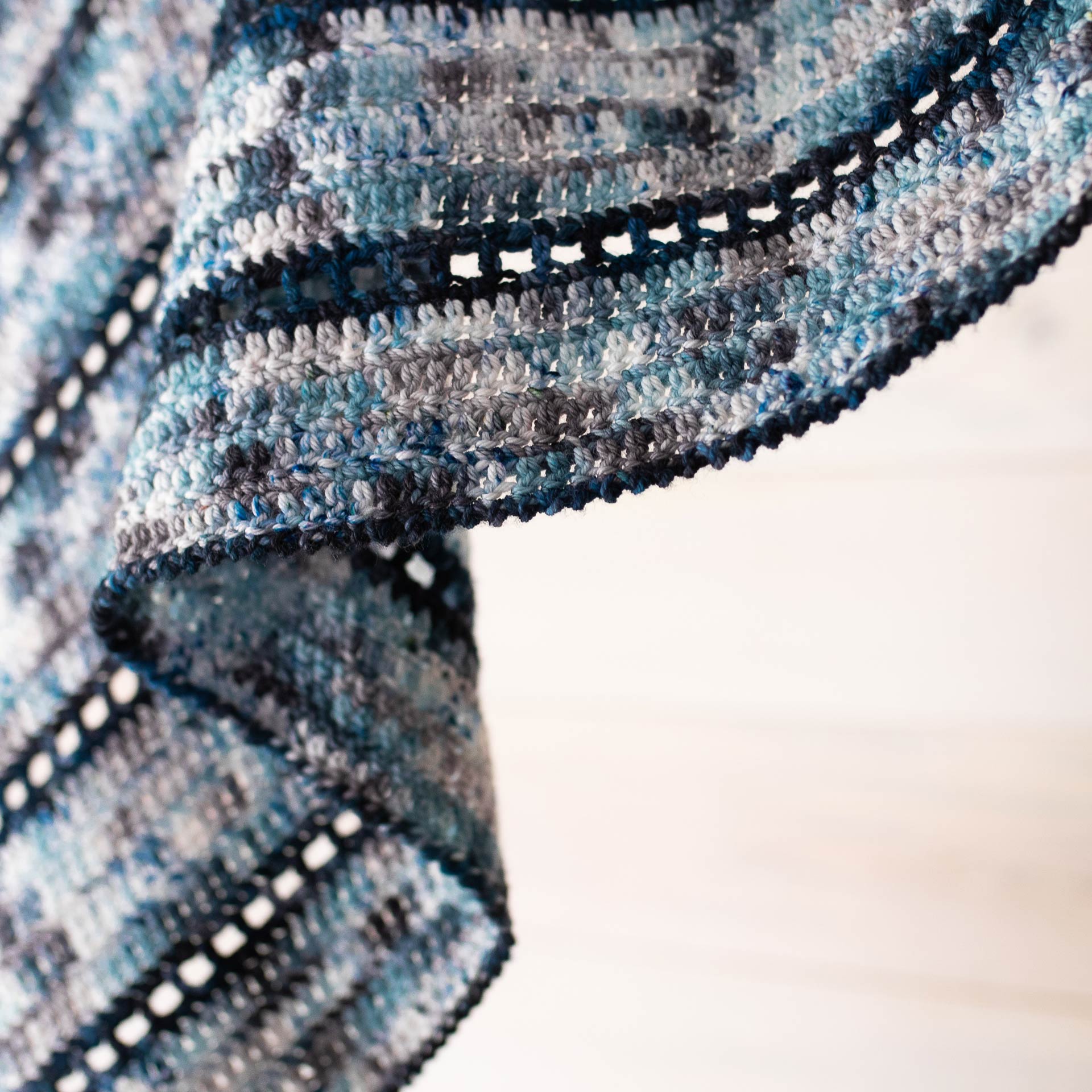
Hi! Great article. I couldn’t find a pattern for the very top photo. Is there a link? Thanks! 🧶
What is the right way to check the gauge? I don’t gauge because I can tell how and what is right, can you please explain? Thank you!!!!
Leave a comment