



Tunisian Crochet — A Beginner's Guide

Tunisian crochet is a knit–crochet hybrid worked on a long hook — it may look intimidating, but you can start today once you know how it works.
We like to think of Tunisian crochet as the cozy middle ground between knitting and crochet. You'll be using one long hook, but you'll keep a row of loops on it like knitting — this method results in a dense, woven fabric. So rest assured, stitchers: if you can chain and pull up a loop, you can start your Tunisian crochet adventure now.
What Is Tunisian Crochet?
Tunisian crochet, also known as Afghan crochet, is a technique worked with a long hook — or a hook with a cable — where you keep multiple loops on the hook and work each row in two passes. A forward pass picks up loops, and a return pass works them off. This creates a firm, woven-looking fabric. In this guide, you'll learn about the difference between Tunisian crochet and regular crochet; the basic stitches; what you'll need to start; and the easiest way to dive in with a Tunisian crochet kit.
Tunisian Crochet vs. Regular Crochet

| How they differ: | Tools | Technique | Resulting fabric |
|---|---|---|---|
| Tunisian crochet / Afghan crochet | A Tunisian / Afghan hook sized for your yarn needs. (Use a long straight hook for flat pieces, and a cabled hook for wide projects.) Note: Unlike typical crochet hooks, Afghan / Tunisian hooks have no thumb rests — but don't worry, you'll get used to the difference! | Work a row of stitches onto the hook in a 'forward pass' — then off in a 'return pass.' Loops stay ON the hook. Instead of finishing one stitch at a time, you'll pick up loops for all the stitches across the row in the forward pass, and then work them off the hook on the return pass. Note: You never flip the piece over, so the front (or "right side") is always facing you. | A dense, woven-like fabric. Less stretchy than regular crochet |
| Regular crochet | Typical crochet hooks | Insert the hook into a stitch, yarn over, pull through, and complete the stitch. (You work one stitch at a time and complete it before moving on to the next.) | A lacy texture with stretch |
An honest note for beginners: Tunisian crochet fabric can definitely curl. Expect it to happen, but don't get discouraged — sizing up your hook will fix it!
The Basic Tunisian Crochet Stitches
Before you begin working any of these well-known Afghan crochet stitches, you'll want to start with a standard foundation row. Work your desired number of chains, just like you would in traditional crochet. Skip the first chain (its loop is already on the hook) and start in the second chain from the hook. Insert the hook under the back bar of the chain — yarn over and pull up a loop. Keep this loop on the hook and repeat across the row, making sure all loops remain on the hook.
The return pass is worked from left to right without turning the work: yarn over and pull through the first loop on the hook, which creates a chain stitch. Then, yarn over and pull through two loops; these are the chain stitch just made and the next loop on the hook. Follow with: yarn over and pull through the next two loops on the hook. Keep yarning over and pulling through two loops until only one loop remains on the hook — that last loop will stay on the hook since it is also the first stitch of the next row.
Once you have your foundation row, you can venture into any of the following Tunisian / Afghan crochet stitches, though we definitely encourage trying out the simple stitch first. One more helpful note: Most stitches vary by where you insert the hook.
Tunisian Simple Stitch (TSS) is the most basic Tunisian stitch — and the one we recommend starting with if it's your first time. Just put your hook through the vertical bar stitch, pull up a loop, and keep that loop on your hook.
Tunisian Knit Stitch (TKS) involves inserting the hook through the fabric from the front to the back — in the middle of the vertical loop. Then yarn over, and pull up a loop. You'll be doing the same return pass as you do for the Tunisian Simple Stitch.
Tunisian Purl Stitch (TPS) looks a lot like the purl stitch in knitting. This version is worked in the same way as the Tunisian Simple Stitch, but with the yarn held at the front.
What You Need to Start
Here's exactly what you'll need to get started on your Tunisian crochet adventure:
- An Afghan / Tunisian hook in the size your yarn wants. Pro tip: you should size up your hook size by .5 mm - 1 mm. Use a long straight hook for flat pieces, and a cabled hook for wide projects.
- A smooth, well-plied yarn so stitches show clearly while you learn. Our Superwash Merino DK and Sport are forgiving learning weights!
- A small first project. We found it helpful to start out with a cute cowl or washcloth before trying out a bigger project, so you really get the hang of it.
For more details on hook sizing, check out our handy fiber information page.
The Easiest Way to Begin — a Tunisian Crochet Kit

Now that you know the basics of how to Tunisian crochet, we think the lowest-friction starting point is a kit that includes a beautiful pattern paired with the right amount of hand-dyed yarn. Here are some of our favorites!
The Calliope Tunisian Crochet Kit is a great project if you're looking to explore this method for the first time. This two-color Tunisian crochet triangle shawl is designed to highlight clean lines and thoughtful color play. We love the simple yet striking vibe.
The Spirited Away Tunisian Crochet Cowl Kit is another ideal first-Tunisian project that feels calm, enchanting, and approachable — especially with the step-by-step photo tutorials. Worked in soft entrelac panels using DK yarn and a simple straight hook, each stitch flows into the next like a drifting breeze.
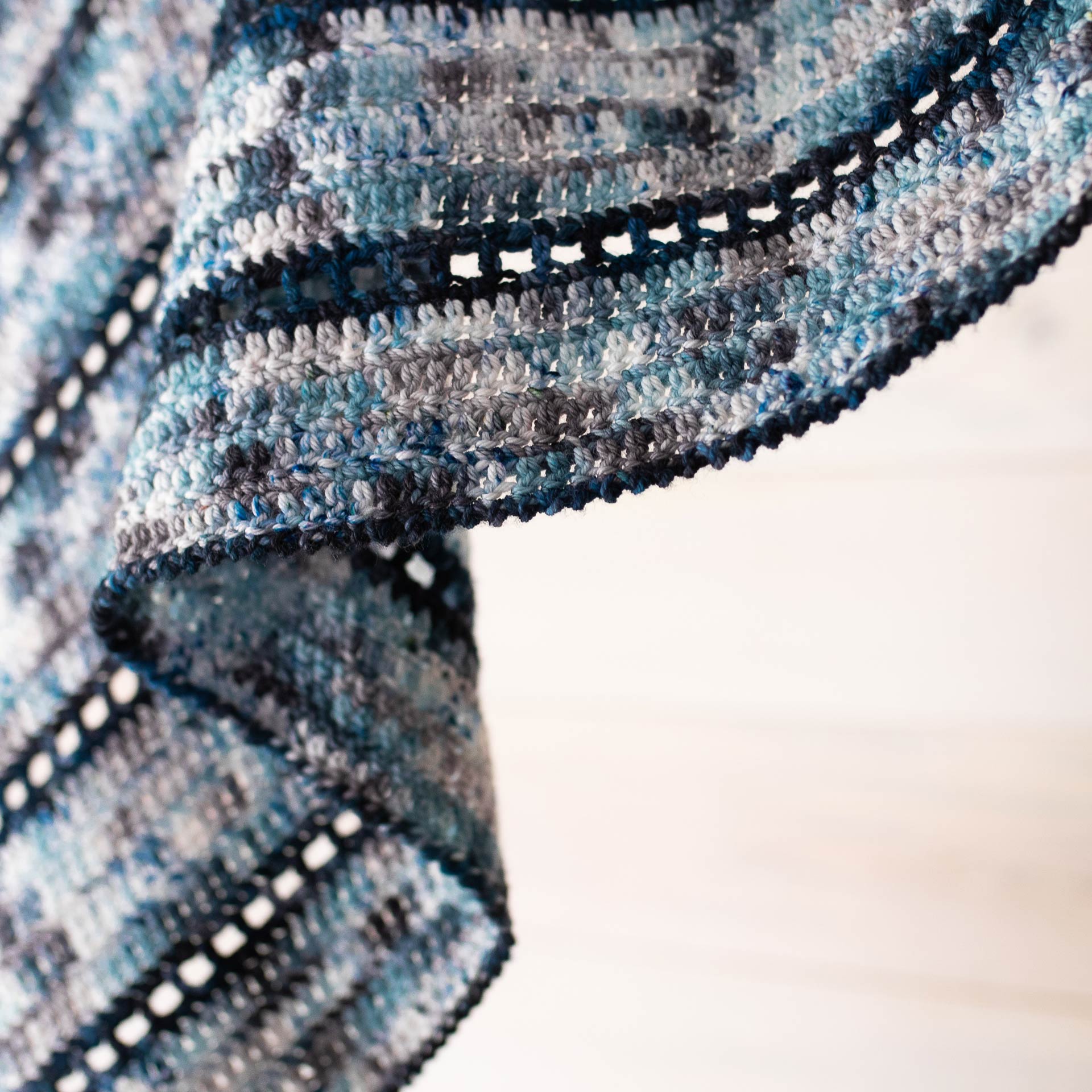
The Gentle Current Cowl Tunisian Crochet Kit was also designed with beginners in mind — the pattern uses straightforward stitches, simple shaping, and clear instructions. It's a lovely first step into Tunisian mosaic crochet inspired by gentle, rolling waves.
Just a quick note on our kits: The patterns are digital downloads, and the skeins will be shipped to you separately. For stitchers who already have a stash they're itching to use — we sell just crochet patterns by themselves too!
We hope this guide helps you feel ready to dive into a new form of expression! Tunisian crochet is a wonderful pastime for passionate stitchers who want to adopt a new technique that's challenging enough to keep things interesting — but approachable enough to feel empowered to finish your creation. Ready to crochet the Tunisian way? Pick your favorite kit and cast on!
FAQ
Is Tunisian crochet easier than knitting?
Knitting and Tunisian crochet use different techniques, so the learning curve will depend on your previous stitching experience. Some crafters have found Tunisian crochet more approachable because all active loops stay securely on one hook instead of sliding across two needles.
What hook do I need for Tunisian crochet?
You will need an Afghan / Tunisian hook sized for your yarn needs. For flat pieces, use a long straight hook — and for wide projects, go with a cabled hook.
Why does my Tunisian crochet curl?
When you're making flat fabric and pulling up loops toward you, that causes vertical tension, which causes curling along the bottom and top. As the rows accumulate, they will push toward the front of the fabric, emphasizing the curl even more. Expect it to happen, but don't get discouraged — sizing up your hook will fix it.


Leave a comment